21 February 2021

February News Part 2

 London North Eastern Railway 1950 Brake Corridor Third E1866E (GOLD)

As suggested last time, the contract overhaul of the bogies has now been completed, bringing to a close the Carriage & Wagon element of the M&GN Society's Covid-19 support "package" for the North Norfolk Railway. The final part of the task was finishing off a few cosmetic items on the second bogie such as picking out the letters on makers plates etc in white and the preparation of some brake-gear pull rods. Immediately afterwards, the coach was lowered back down onto the bogies for the final time. Unless there are any further issues currently unknown to us, then E1866E should now not require lifting again during the restoration.


Electrical work continues with the wiring progressing both underneath and inside the coach. Various extra lighting circuits have been added, to allow flexibility for the type of lighting in use; with some lights operated independently just on this coach and others lighting and extinguishing in tune with the rest of the lights on the whole train, using the through wiring. Much of this is terminating inside the guards compartment which is having a new lighting box made to control the new functions.


Also ongoing is further polishing of the sliding light frames which are due to be fitted to the main windows in due course. Trusty Brasso is being used to improve their finish from the initial clean they all had last year.


British Railways 1959 Brake Corridor Composite E21224 (GOLD)

Exterior painting has continued uninterrupted, with the normal distractions of a running railway not being present. The coach was rubbed down and the second coats of crimson and cream gloss applied, which has added depth to the finish and covered any misses first time around.


Shortly after, the two corridor ends of the vehicle were undercoated and glossed in black. 


Once this had hardened, the upper lining was marked out and so far the gold (ochre) line has been applied, along with about 1/4 of the black line so far.


Some more painting has also been completed internally, with the guards van ceiling receiving its final coat of white gloss, and the two side walls (which were still in primer) brought up to undercoat to match the first two walls pictured last update.


Some of the final woodwork for the side corridor has been completed and fitted, the most attractive of which are the horizontal handrails over the windows. These have come out really well and we are very glad we bothered replacing the missing originals now they are in place and looking nice. Also fitted are the replaced trim immediately below the sliding lights, which as already mentioned had been cut down/lost due to the previous owner fitting much thicker double glazed units to the coach.


A great deal of time has been spent fashioning curved blocks of wood to replace missing originals in the two end vestibules. These complicated arrangements that hide joins in the top corners of the carriage also support "pelmets" to cover sliding door mechanisms. They seem to come in about 5 different varieties, with modifications to the coach over the years not helping to work out what was original. In the end a compromise has been made and something resembling an original has been created that will perform the same task.


Maintenance

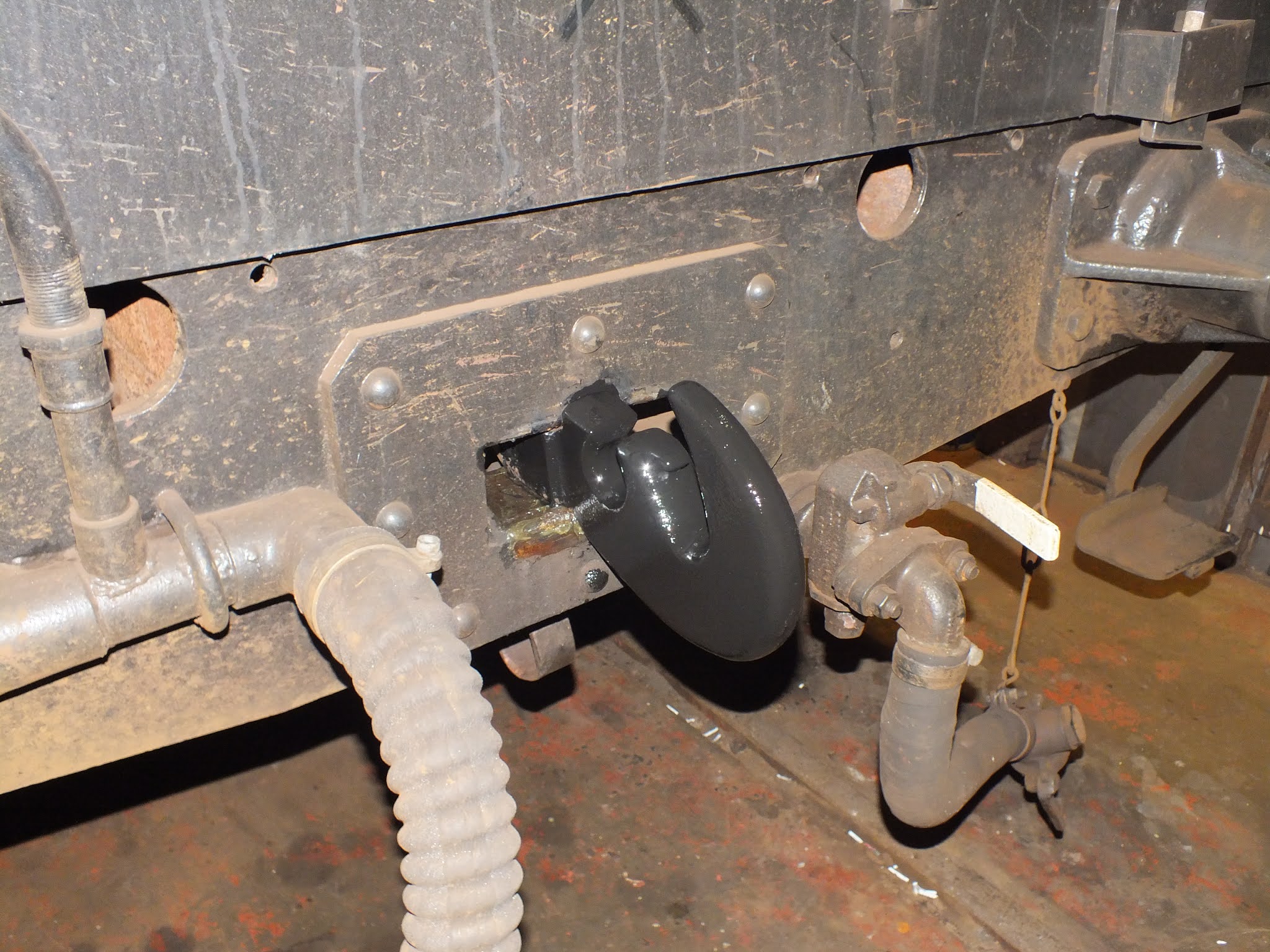
The first two (of around four) vehicles from the operational sets down at Sheringham have been tripped to Weybourne to receive repairs. They are Suburban Third W46139 and Suburban Brake Third E43357. The former had a worn draw hook (coupling) and has been in the shed for this to be changed for a good secondhand example.


The latter had a troublesome vacuum brake cylinder. This has been removed and the cylinder is now awaiting overhaul before it can be fitted back on.


Whilst E43357 is at Weybourne the guards van floor is receiving a few top up coats of red paint as it has naturally become a little worn in the five years since it was last done.


Workshop

The body of the clocking in machine appears to have now been completed, and currently awaits reassembly.


07 February 2021

February News Part 1

London North Eastern Railway 1950 Brake Corridor Third E1866E (GOLD)

The news that everyone had been waiting for! The second of the pair of bogies that has been under contract restoration was reassembled this week, with all of the prepared components fitted into place. This first consisted of lifting the bogie frame onto the reassembled wheelsets, which in turn had been prepared with the fitting of the axleboxes to the axles with their white metal journals. With a "rolling chassis" achieved, several days were spend reassembling all of the brake linkages, pull rods, brake blocks with their associated pins and bolts. Various alignments and positions were checked along the way with greases/lubricants also applied where appropriate. The big finish was then lifting the sprung central bolster back into the centre of the  bogie all but completing the overhaul.


The two completed bogies have now been moved "across the way" and are now positioned ready to refit to the coach, all being well next week. There are a few unfinished components underneath the coach which require cleaning and repainting whilst the body is still lifted on the jacks, after which the contracted element of the project should be formally completed when the coach is lowed back down and reconnected.

The electrical work continues with lots of investigations and referencing to original electrical schematics to ascertain the correct sizes of wire to fit to the recently installed underframe trunking. An extra junction box has been fitted below an original BR fusebox to accommodate some of the extra equipment.


British Railways 1959 Brake Corridor Composite E21224 (GOLD)

Exterior painting has progressed well over the last two weeks. The primer was quickly completed, after which the divides between the red and cream were laid out. A layer of undercoat followed before we arrived with the gloss version of the classic British Railways Crimson & Cream scheme. By the end of this week the first (of two) coats had been applied to both the red and cream elements. Whilst there are still two more coats to apply along with lining, the coach already now pretty much portrays what it will look like when finished.


Sometimes, when waiting for various coats to dry, the exterior can't be progressed for the whole of the working day. During these periods of an hour or two, paint is also being applied to the guards compartment (the luggage compartment was painted recently but the guard's booth itself remained in primer). So far the ceiling has received its first coat of gloss, and two of the four walls have been undercoated, including the inside of the door.


The other main task of completing the interior of the side corridor and two passenger vestibules also continues. Following on from the Holt end fitted last time, the final piece of ceiling for the entire vehicle, the Sheringham end (or middle) vestibule, is now in place. This ceiling had survived and had been prepared a few years ago, with just supporting timberwork to replace before it could be refitted. Extra bulkhead trim modified in the 1990's has been returned to original spec: we think it was doubled in size to prop up a collapsing ceiling at that time. This ceiling has also been painted in gloss but will be needing a second coat. Beading for both this area and the Holt end vestibule has been produced and is being painted on the bench.


Also on the bench is a motley collection of woodwork which are replacements for items we have declared either missing or damaged beyond repair. The coach's previous owner had fitted double glazing units which were much thicker than original glass, so some of the finishing woodwork from around the window had been lost to accommodate them. Also removed were the varnished poles which sit in front of the windows along the corridor and act as a handrail. Luckily we had just enough from a scrapped coach many moons ago to return the handrail arrangement to original format.


This sort of thing is becoming much more of an issue as the years go on, there are lots of railways who have no regard for the original fittings of Mark 1 stock, seeing them as consumables rather than historical in their own right. Lot of "conversions" are done to suit the needs of the railway at the time, usually involving cheaper materials, and original items are either sawn up beyond repair or thrown in the skip during modifications, making historical restoration in the future by a new owner difficult or impossible! It would not be so bad if the removed material was tucked away by the previous owner and thrown in the coach when it is sold on to keep the options open in the future, but this is very rarely the case! The window handrail poles are a small example of this: a nice feature simply binned during its earlier preservation life. We are very lucky that the 1970's/1980's/1990's members of the railway's C&W team carefully stripped several scrap coaches and squirreled away many original features, which 30 years on can allow another of the railway's coaches to be returned to true 1950's condition (Rant over!)

Also included in the woodwork being restored is a second pair of internal door panels. One pair had been restored in advance but we have found to be without the second pair. These are not the best examples in the world, but have been rubbed down, bleached and are now being re-varnished. The window poles mentioned above are receiving exactly the same treatment, with the cast "end caps" cleaned up and sprayed silver. Originally these were anodised aluminium finish, but they were in too poor a condition to polish up.


Maintenance

The annual "C examinations" on the running stock at Sheringham has now started. As part of this, two sets of stock have been positioned in the main platforms at Sheringham (not currently in use for obvious reasons) and each has been split apart, to allow examination of the buffers and drawgear at the ends. Brake testing will follow along with door and interior inspections. At least two sets will be prepared to allow for an optimistic programme of services in the 2021 season.


The next coach due to come in the workshop to be finished, First Open M3116, has been trapped in at Sheringham by track renewal, so whilst we wait for it to be extracted for us, some more bits of pieces (bogie brakegear safety slings) for the vehicle that were left behind in the workshop are being repainted ready for refitting.


Workshop

Not a great deal of other work has been possible, however a clocking in machine has made it into the workshop and is being restored by a single volunteer. It has been rubbed down and the body is being french polished. The mechanism has been removed and has been spray lubricated, I am not sure as to its predicament in terms of whether it works or not, nevertheless the bell rings when the plunger is pulled!


22 January 2021

January News Part 2

We have now settled into our routine for the foreseeable future, with all labour concentrated on two major projects in the shed.

London North Eastern Railway 1950 Brake Corridor Third E1866E (GOLD)

The preparations for the big reassembly of the second of the pair of bogies under contract restoration continue. The four axleboxes, which had just been started last update, are now completed and lie resplendent in front of the fire in black gloss.


These are now ready to be refitted to the wheelsets, and accordingly new oil seals at the rear have been cut and the bearing surfaces on the ends of the axles polished ready to accept the boxes and white-metal journals soon.


The marathon painting session of the ancillary equipment of the bogie is also practically completed, with some very uninspiring and "un-photogenic" boxes of assorted washers and pins being some of the few items available to record progress.


On the coach itself: the splash guards on the underside of the floor (described last time) have all been specified, material delivered, cut to size and fitted over the last two weeks. The coach was lifted again to facilitate this work.


The sheets involved more than simply screwing up into place, the design of the floor required a degree of framework to be constructed upon which the thin panels hang. They are galvanised steel which will last much longer in service but made the sheets significantly heavier to lift up into place in a socially distanced manner!


The opportunity has been taken whilst the coach is on jacks for volunteers to install new electrical trunking to route the new power feed cables from the main fuse box, diametrically across the coach and up into the guards area. This is still work in progress but the cable route is now clear to see.


British Railways 1959 Brake Corridor Composite E21224 (GOLD)

Progress has really taken off again now and whilst there are only two people on task making advancement limited, when judged in Covid times its been a busy two weeks. The interior has moved on significantly with the furnishing of the walls and ceilings in the vestibules and side corridor being a major area of focus. The final section of modified ceiling for the Holt end vestibule has been fitted meaning these only need beading to finish them off.


All of the veneered side panels, restored a year or two ago, very quickly were fitted to the side corridor making this area instantly look much closer to completion. The tightness of the corridor and lack of natural light means the photos can't do this area justice.


Not content with just the paneling, the window surrounds quickly followed, along with much of the beading. Some pieces were damaged or missing however, so a batch has been machined up and is now being built up with varnish prior to fitting.


Further down the coach, a delay in the paint for the exterior arriving allowed two days to be spent painting the luggage compartment instead.


This had been primed and undercoated earlier in the year but the gloss was still in its infancy when Furlough beckoned. Over the two days there was just enough time to get two coats of brown (bauxite) gloss on the cage, insides of the doors and wall planking. 


Also treated were all of the interior sliding doors (not currently fitted to the vehicle) which are also painted brown. These doors are now complete and will simply need refitting once the lino is in place allowing the floor runners to be returned into position.

Once the paint supplies were replenished the main priority task, exterior painting, could kick off in earnest. With all preparations complete it was not long before the pink primer made its way around the coach. By close of play Friday both sides and the Sheringham end had been primed with just the Holt corridor end still to do. The coach has returned to a single colour for the first time in many years!


11 January 2021

January News Part 1

The yo-yo that is furlough has bounced back up once more and there are now four of us in Carriage & Wagon again. Sadly in order to remain responsible the volunteer situation has to remain the same which means we will continue to progress at a fraction of the speed we once ran at. However for the first time since October some non-contract work is now able to tentatively progress again, which I hope to resume bringing updates on, but please don't expect too much action!

London North Eastern Railway 1950 Brake Corridor Third E1866E (GOLD)

Since the last update the contract bogie overhauls have continued to progress. The central sprung bolster was completed and painted on the first bogie and accordingly lifted back into position. The first bogie is therefore essentially completed now and is inside the shed awaiting its friend to join it. The second bogie has had all its brakegear painted which is now ready for reassembly. The final items to prepare for the big assembly have been the two wheelsets.


These are now fully painted up to gloss and the axleboxes are now being prepared to refitting.


Part of the contract is also to prepare and fit metal plates above where the wheels are going to sit to act as barriers to the "road dirt" that tends to get slung up onto the underside of the floor. This is particularly important to guard against on a vehicle such as this with its wooden floor. Measurements have taken place ready to cut these sheets.


In between lockdowns (back in 2020) some volunteer work continued to progress and the cleaning, repairs and general preparations to the sliding saloon windows were completed. These were good winter bench jobs and the windows are now stored ready for when the time comes to refit them. Other work has included some wire terminations inside the guards compartment, which accommodates part of the additional wiring being installed as part of the conversion from the coach's previous corridor life to the open saloon format that it will emerge as.

London North Eastern Railway 1931 Corridor Third E12493E (BRONZE)

The refresh work was concluded some time ago (in the autumn) and the coach now looks a lot better resplendent in maroon. I still haven't had chance to get a photograph of it, mainly as I have had no cause to visit Sheringham station for any "essential" reasons!

British Railways 1959 Brake Corridor Composite E21224 (GOLD)

Not a huge update this time, as the coach was halted immediately when staff were furloughed. However all being well there will be greater progress to report over the coming weeks as the coach is the current priority. Work has resumed on the Holt end vestibule and it is clear to get things right several of the wooden trim pieces have to be either modified or replaced where missing. This is of course taking time but more paneling is going in and making the area look more complete all the time.


Also started are the very final preparations for applying the much delayed paint to the exterior of the vehicle, which should hopefully transform it! It is being checked and double checked all the way around the ensure the outside is completely finished and ready for paint next week.


A few "loose ends" such as the corridor end lighting jumper cables and the small hooks that the luggage doors latch on to (when being held in the open position) are being prepared and fitted. Once these are completed we will work top down and apply the final coat of roof paint and then bodyside paint. This was originally scheduled for April (2020), and again in November, so third time lucky!


Maintenance

Maintenance has continued throughout... the only element of C&W not to cease really. This is set to continue and a series of examinations now need completing if our stock is to be safe to run later this year. These can't be done quickly so have to be done now and in a certain order if the correct compartment stock is to be available for any of the potential commercial/operating scenarios (best case right through to worst case) that are being considered.

The only large maintenance support that has been ongoing in the workshops has been the cleaning and partial repainting of a Mark 1 wheelset which is being prepared for brake coach 21103 which has wheel flats at one end.


31 December 2020

REVIEW OF THE YEAR 2020

Sitting down to write the annual summary of Carriage & Wagon activities and achievements has been surprisingly difficult. It has been a year of very few highs and an exceptional number of lows. I apologise in advance if the report is not as positive and rosy as people may want it to be: however I have always prided this Blog in being an honest account of the view from the coalface, and always try to keep the "buzzwords" and unrealistic over-optimism that can be found elsewhere to a minimum. The highs are sweeter when the lows are acknowledged and come to terms with, rather than glossed over, and I believe that readers value the honest account. So strap in and join me on a roller coaster recap of this most balmy of years!

January dawned as a normal month, at the works were vintage coaches M&GN 129 and Thompson saloon E1866E, along with Mark 1's E21224 (Brake Composite), E4521 (Open Second) and W25189 (Corridor Second), receiving Bronze, Gold, Gold, Silver & Bronze overhauls respectively. The completion of the two bronze examples was fast approaching and we were mostly inside the shed (hiding from the weather!) beavering away and getting as much overhaul work done as possible before the main season started. Great progress was being made with interior refreshing of 129, the continued internal restoration of E1866E, bodywork and door preparation on E21224, the Sheringham end steelwork renewal on E4521 and the compartment repainting and re-varnishing inside W25189.


February was less mundane as both Great Eastern Railway 853's rebuild and this very blog were nominated for the awards at the Heritage Railway Association's annual ceremony. A trip to Birmingham was made by about a dozen delegates from the railway for an excellent evening celebrating the nation's rail heritage achievements. Whilst neither of us won the award the honour of being nominated and the evening itself certainly brightened what would normally be a fairly dark and damp month! Back in Norfolk, the works described in January continued with the notable exception of W25189 which was painted at released back into service, at the owner's request painted in its early 1960's Chocolate & Cream livery. Colourful and controversial on a railway this far East, W25189 made quite an impact when rolled out and is the only Mark 1 on the railway which genuinely carried Chocolate & Cream "back in the day". The coach's lack of steam heating however meant that it was not used straight away on trains and was initially parked up awaiting warmer climes.


The following month, everything changed. A new project to replace W25189 was brought in in the form of M3116, the First Open from the dining train which required wheelset re-profiling and minor repairs. It was dismantled and a start made, but we were swimming against the tide and the first sinister sign was the significant drop off of volunteer labour as individuals (quite rightly) made personal choices to stop coming in and to stay at home. Less than two weeks later the UK government took action and made these voluntary steps compulsory with the national lockdown and compulsory instruction to stay at home. We were, in effect, closed.


April saw the works fall silent for the first time since they were built, the combination of uninterrupted pension payments and the creation of the Coronavirus Job Retention Scheme thankfully meant both volunteers and staff alike could remain at home safe. In May the railway began its slow and uneven recovery, resurrecting fragmented parts of various departments one-by-one, starting with the Engineering department who reopened at Weybourne undertaking contract work only.

By early summer, as part of the recovery package negotiated with the M&GN Society, a contract was let for the overhaul of the two bogies from Thompson E1866E, a coach which would ordinarily be worked on by 100% volunteers. This brought two members of staff off the furlough scheme and back into the C&W sheds at Weybourne to undertake the work. With no volunteers on site, this was the first carriage activity for some time and represent the first green shoots. As one of the members of staff still on Furlough, this blog wasn't restarted to document this work although it was recorded in the M&GN Society's house journal Joint Line.

By July we experienced the novelty of running a train service again! The warmer temperatures had brought the dreaded virus to a level where socially distanced and heavily regulated fun was permissible again. At this point reasonable sections of the railway were brought alive again with more staff and volunteers returning to run the new service. Understandably however prospects were shaky and costs needed careful control. With C&W being primary a costly department (as opposed to income earning) restoration work was not restarted, and we became a maintenance only department running with the same two staff engaged in E1866E's bogies and no further volunteers. The initial trains made great use of the Quad-Art set, which ran more miles this year than their entire preservation life put together, with the suburban set following as a second train in the "peak summer season".


After further recovery and strength building across the summer, when incidentally W25189 made its delayed debut into passenger service in August, we reached September and at long last it was deemed acceptable to tentatively restart some workshop activity. Two more members of staff were half brought back off Furlough (part time) and a limited number of volunteers returned each day utilising a booking system to prevent there being too many people in the shed. New working practices were brought in and we appeared to be getting back on track. During this period M&GN 129 was finally completed and returned to the shed at Holt, along with some of the repairs to M3116, which being an open coach was not felt required for the foreseeable future. The wheels were completed but the coach stored without the remaining repairs being completed. Also stored was Second Open E4521, its major overhaul stopped and also stored stored at Holt. It was clear that things were going to be very different now, with the future strategy for the department drastically altered. Unaltered however was the major overhauls of E1866E and E21224, which both made modest progress again for the first time in September and October.


One of the "wild card"projects in October was the conversion of an open coach into a compartment one! The only open suburban out of the four on the railway, which had been out of use for the summer, had quickly designed varnished bulkhead walls bolted into place making it suitable for use to make up a fully compartmentalised train for the winter services. The whole project was designed and completed in one week and was one of the better examples over the year of working together and getting the task completed.


Sadly we crashed down again in November with a second national lockdown which put staff back on Furlough and ceased most volunteer C&W work again - one exception being the Thompson E1866E was able to continue on a much reduced basis with limited M&GN volunteer labour. Whilst the lockdown eased in December allowing Santa Specials and Norfolk Lights Express trains to run, things were not strong enough for C&W to reopen properly again, so no overhaul work is currently taking place on any carriages other than E1866E.

We end the year with a quick look at some figures. Just two overhauled vehicles: 129 & W25189, were produced during this year, these only being possible having had a significant amount of their work done in 2019. To compare six vehicles were produced in 2019 and in the years prior to that we averaged 5-7 per year, so obviously a large drop. We end the year rather battered and bruised, with the condition of the Quad Art set and Suburbans much reduced after being thrust into daily service when they were restored for occasional use only.

However I will end on lighter note. In spite of the ridiculous challenges our team and the carriages have faced, that irrepressible human trait to keep on going, get things moving and to make the best of it has been there throughout. Much easier to give up entirely... however trains have run, passengers carried and coaches maintained in service. Many volunteers and staff trapped at home have kept in contact, even visited each other (in their gardens) when they hadn't previously. It is this behaviour that gives me hope that one day the C&W will reopen proper and reach the output it had before once again.

I appreciate readers allowing me to finish with a direct message to the C&W volunteers and furloughed staff who read this: hang on in there, you most certainly have not been forgotten. We will be getting back to it, and will (someday hopefully soon) want as many of you as possible back with us to make it all happen once again!

Happy New Year to all - fingers crossed 2021 brings better times.