21 March 2021

March News Part 2

London North Eastern Railway 1950 Brake Corridor Third E1866 (GOLD)

No progress to report.


British Railways 1959 Brake Corridor Composite E21224 (GOLD)

The signwriting on the outside of the vehicle has now been completed. Outstanding items since the last update included the remainder of the corridor end data and the underframe lettering. Aside from the normal historic and NNR required lettering and symbols, including the "Emergency Lighting Point" and brake release chord stars, extra mainline registered features have been applied on this coach, such as wheel profile markings on the bogie and an arrow on one corner of the vehicle which acts an an aid to identifying components for maintenance and exam, such as wheels and doors.

The opportunity of the vehicle being out of the staging allowed for the new batteries to be fitted. These have a higher rating than many of the batteries fitted to several other coaches, hopefully this will help to power the new toilet which is due to be fitted, along with longer lighting life given this coach is due to run on a reasonable number of after-dark services.


With lining and lettering completed, E21224 was returned to the staging area for yet another rub down and application of the final coat: varnish. This has sealed in all the previous work and the repaint is now officially concluded.


Attention has since turned to the exterior "trimmings". The full length handrails have been bolted into place on the guards doors, and the brass grab handles fitted to the four passenger doors.


More components including the locking bars for the luggage door mechanisms and the original BR cast end data panel (now officially superseded by the "mainline data panel" but its nice to have it on anyway for historic interest) are currently on the bench receiving a final top coat of black paint before fitting. The job list for the exterior of the vehicle is now virtually exhausted so the focus through the spring will be on the interior.


Speaking of the interior, the troublesome vestibule ceilings continue to require fettling: some beading previously thought to be complete has required more minor work this week. The four vestibule lighting units have been finished off, sprayed silver and fitted into place.


The work to fit the internal woodwork and panelling to the four doors has progressed well, with the remaining three doors fitted out. One was missing a single component so an un-restored example had to be extracted from spares and rubbed down and varnish built up on it, which has delayed the completion of the doors. Such is life when dealing with restoration! Additionally, after the woodwork was first fitted two doors have had problems with the wood interfering with the operation of the sliding droplight windows, so again more dismantling and modifications were required.  
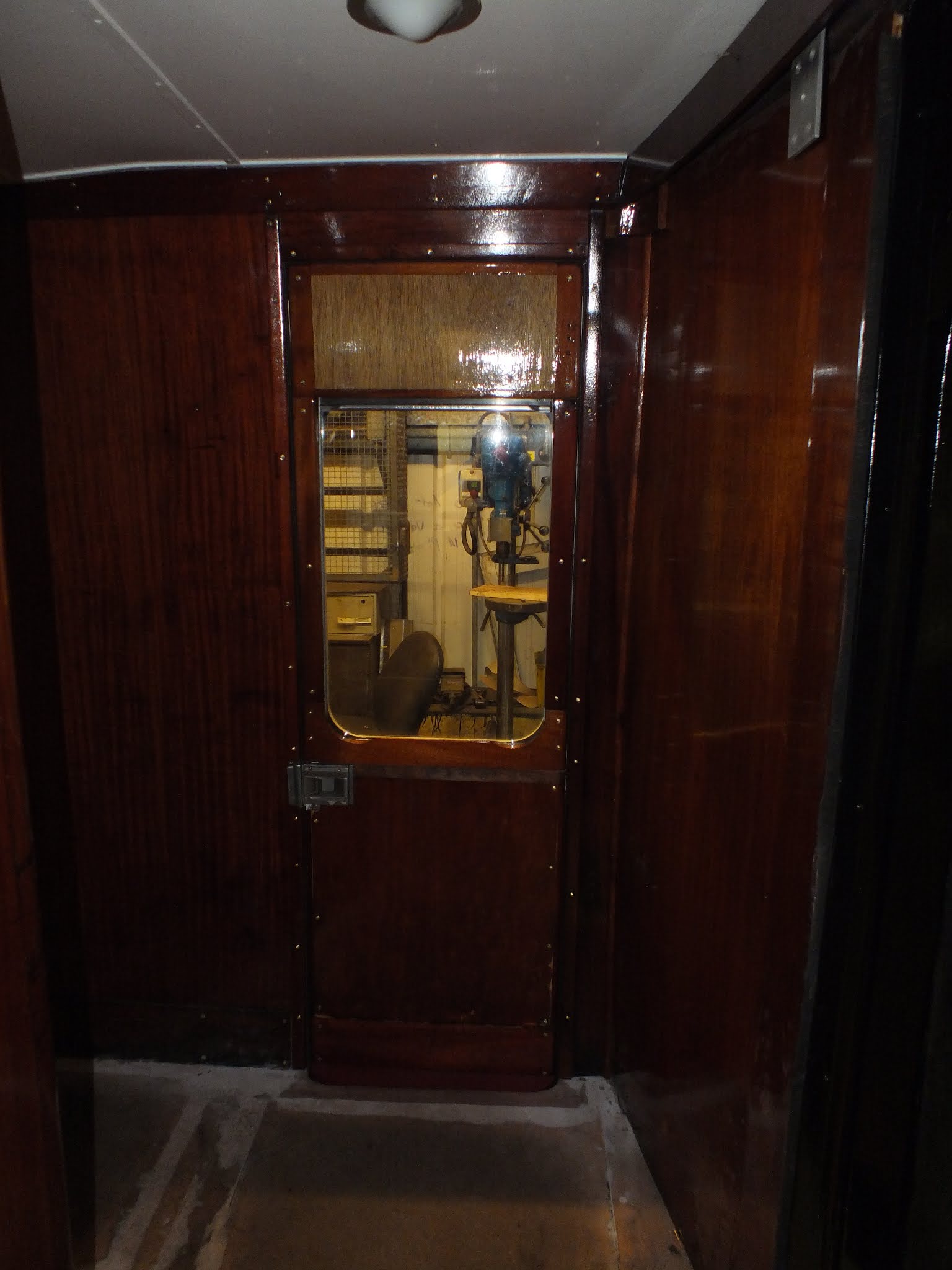


Also being restored are some rails/bars associated with the guards and luggage areas.


The flooring contractors made a third visit to see the coach to finalise their details for laying the lino flooring. We hope for this to be fitted very soon so the interior can be progressed further.


British Railways (SR Design) 1948 25 Ton Brakevan 55167

Everyone's favourite Holt based solicitors firm, Bedell, Maynard & Turl, have been progressing the Southern Guards Van in their socially distanced emporium. The main theme continues to be "stripping down" with the Sheringham end verandah wall now removed as this will require total replacement. It was suffering the usual wood rot in the areas near the floor where water sits, but also had issues half way up and had already been spliced up all the way up one side, using a solid piece of wood with grooves cut into it to fool people into thinking it was planked!


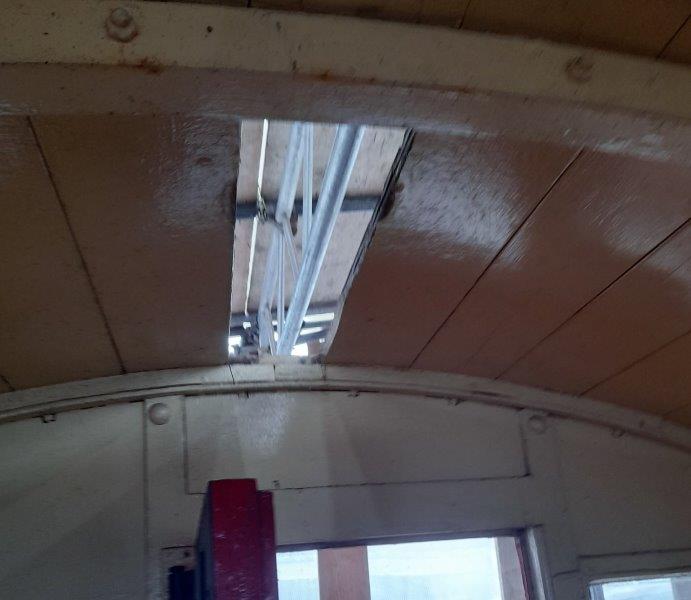
Some other timber has also been removed including one of the roof planks.


More of the exterior (which is being retained) has been rubbed down ready for repainting in due course, including the Holt end cabin wall.


The corroded stove pipe and upper verandah ends which were dispatched to Weybourne are being worked on separately. The corroded steel skin is being replaced with new galvanised material, these new pieces having been cut out now and are shortly to be reattached to the original framework, which has been retained. The latter has been cleaned down and is now being repainted.


Maintenance

Brake Third E43357 received the remainder of its floorboard and guards floor coats of paint, completing the cosmetic maintenance tasks. In addition to this, the unreliable handbrake protection valve (which stops the train brakes being released when the handbrake is on) has had a temporary repair made to improve it for this year until the valves can be re-engineered with better springs; a side project which has encountered pandemic caused delays. The coach was returned to Sheringham to join two other suburbans so we now have three of our five coaches ready for the railway's relaunch on April 12th.

Composite Lavatory E43041 is the next in line at Weybourne to be repaired. This vehicle only needs a vacuum cylinder overhauling to make it serviceable again. The naughty cylinder has been removed, stripped down and components overhauled. By the end of the week an attempt to reassemble it has been made but alignment problems were encountered rendering success elusive.


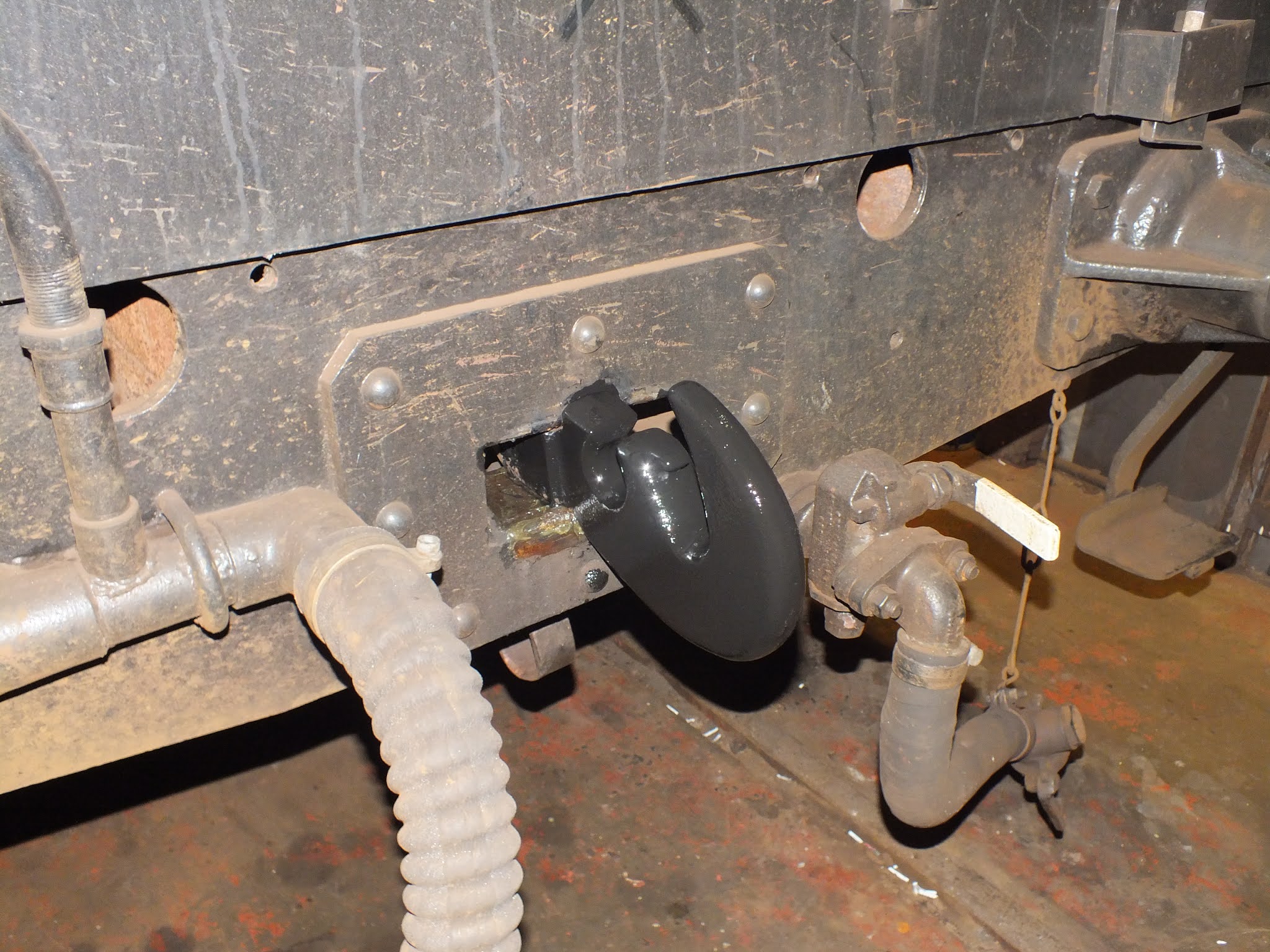
Corridor Brake Second W35148 remains inside the workshop for drawhook and buckeye coupling replacements, however it is still awaiting manpower to undertake these tasks. In the meantime, some additional work tidying up the footboards has been undertaken with them now looking much smarter in undercoat black (gloss to follow).

Meanwhile at Sheringham the C examinations are all but complete on the main "A set" which is required for the 12th April. All that really remains is the full set to be formed up (once the repairs above have been completed) and final tasks signed off and the set is ready to roll. Discussions are currently underway around the boardroom tables as to which vehicles will form the second "B set" for hopeful use in the summer when the railway hopes to be in a position to start steadily increasing operations. It will be a long and steady road moving from the April single train service back up to something resembling full capability.


Workshop

As suggested last time, the agricultural jack for the museum has progressed greatly. A large lump of new timber has been cut to an interesting pear shape and hollowed out to accommodate the screw mechanism. Much of the ironwork has now been returned to the wooden "core" and it is currently back together and awaits treating, painting and finishing.

07 March 2021

March News Part 1

We have been pleased to hear that the railway plans to reopen on the 12th April which will hopefully be the end of this lockdown malarkey. The railway will be reopening on a staged basis in accordance with the infamous road map and the initial carriage requirement will be for one 5 coach compartment set. This will be the suburban 4 set with the disabled converted corridor brake on the end.

London North Eastern Railway 1950 Brake Corridor Third E1866 (GOLD)

Back in the workshop the Thompson saloon has been handed back to the volunteers, with work on the electrical system and cleaning up the sliding window frames continuing. The latter is now complete and very nice they look too.


British Railways 1959 Brake Corridor Composite E21224 (GOLD)

The lettering and lining has dominated the progress on the outside of the vehicle. Shortly after our last update, the upper lining was completed which necessitated a shunt in the shed to extract E21224 from the staging (E1866 taking its place) so that access could be improved to apply the lower lining below the windows. This was quickly completed and the next stage was the lettering on the red bodysides. This includes the vehicle's number, "Guard" and "1" markings on several doors along with a "Load 1 Ton Distributed" in each corner of the luggage areas. Theses are gold with a black border so it was decided to get these out of the way first before moving onto the single colour lettering.


With the numbering complete (it is really nice to see the coach at long last get its unique identity back) the block lettering has now been started, and is currently still in progress. So far, the end lettering at the Holt end has been completed and the solebars have received a final coat of black gloss to pep them up ready for the underframe lettering next week. This remains to be started, along with all the end lettering for the Sheringham end.


At the same time as the exterior finishing work, the inside also continues to progress, albeit in a slightly less glittery manner. The vestibule ceilings have received more beading and have been second coated, so we have reached the milestone of all the ceilings throughout the whole vehicle being fully painted, with just a few lights left to install.


Much of this week has been spend further sanding and filling the floors, which sadly were deemed not quite smooth enough when the flooring contractors were assessing the vehicle ready to fit the replacement lino. This has now been completed and we are now awaiting also for the contractors to return and fit the new flooring, which will be another major milestone in the reassembly.

The final area of interior achievement has been the fitting out of the internal paneling on the first of four passenger doors. This has, in the main, gone together very well; as much of the vanished woodwork was already ready having been restored in the past few years and stored. There have been some issues with levels towards the bottom which had to be overcome - a consequence of matching door cards from other vehicles onto doors from different ones!


British Railways (SR Design) 1948 25 Ton Brakevan 55167

The biggest surprise recently has been the M&GN Society's mechanism to bring some volunteers back whilst maintaining the social distancing limits at Weybourne. They have set up a small base at Holt and three volunteers are to progress wagon restoration separately for the foreseeable future. This has had the unexpected bonus of some "low priority" work being able to be considered/progressed. Rather than a new dawn, the scheme is actually a resumption of a previous group who undertook mid life overhaul and repaints to the LMS brakevan and tank wagons in the goods set. 


Their latest target is the Southern Railway brake 55167, which was another vehicle which was showing disappointing levels of degradation following a full strip down overhaul at Weybourne not too long ago. Water ingress, wood rot and peeling paint had made it a sorry sight, and it has been on the list to do for a few years now. It has now been brought into their restoration tent and a strip down rapidly progressed. The side doors, roof vents and stove pipes have been removed allowing the failed roof felting to be stripped off revealing the planked wooden roof below.


The two end verandah panels have been removed and sent to Weybourne for repair, as these are metal and have corroded.


A hole has also been found in the stove pipe!


A reasonable amount of the peeling paint has been stripped back off the wooden sides to ready it for treatment and repainting.


Maintenance

With repairs to Suburban Third W46139 completed, it was taken back down to Sheringham with the Class 08 and swapped for another two vehicles: Suburban Composite Lavatory E43041 and the disabled brake W35148.


The former is for a vacuum cylinder overhaul with the latter having failed drawhook and buckeye couplings. Neither have been started yet but the footboards on both of them, plus Brake Third E43357 have all received some parch repainting work just to improve their appearance and longevity.


Whilst at Sheringham a big sort out was had of the sets down there. It was remarkable just how mixed up everything was but after six hours we had rough operating sets formed into each of the three platforms. Apparently ever lever in the signalbox was pulled during the shunt except one, quite an achievement! The reforming makes it easier for the rest of the exams to be undertaken pre-opening, and also aids the dropping off and picking up of the remaining vehicles that need to go to/from Weybourne for the repairs. It will also be easier for the operating department to form the sets prior to April 12th - win win win!

Staying at Sheringham, the slow grind of the C examinations continues with a day of wheelset measurements just the latest item to report from a long list of checks.


Back at Weybourne the vacuum cylinder has been refitted to Brake Third E43357 so it won't be long before this one is ready to return to service.


The guards van floor repaint is now also completed with a minor modification made to one of the floor drains to make it removable - strange as this sounds this will aid the future fitting of equipment for the Norfolk Lights Trains.

Workshop

The clocking in machine has now been reassembled and the next project, a vintage (possibly agricultural) jack, has been started. This was donated just before the pandemic and is a nice item despite not being railway.The large wooden "body" of the jack is rotten so will be replaced, with all the ironmongery being transferred across - making it a semi-replica. It will live on however and avoids the bonfire in spirit.

21 February 2021

February News Part 2

 London North Eastern Railway 1950 Brake Corridor Third E1866E (GOLD)

As suggested last time, the contract overhaul of the bogies has now been completed, bringing to a close the Carriage & Wagon element of the M&GN Society's Covid-19 support "package" for the North Norfolk Railway. The final part of the task was finishing off a few cosmetic items on the second bogie such as picking out the letters on makers plates etc in white and the preparation of some brake-gear pull rods. Immediately afterwards, the coach was lowered back down onto the bogies for the final time. Unless there are any further issues currently unknown to us, then E1866E should now not require lifting again during the restoration.


Electrical work continues with the wiring progressing both underneath and inside the coach. Various extra lighting circuits have been added, to allow flexibility for the type of lighting in use; with some lights operated independently just on this coach and others lighting and extinguishing in tune with the rest of the lights on the whole train, using the through wiring. Much of this is terminating inside the guards compartment which is having a new lighting box made to control the new functions.


Also ongoing is further polishing of the sliding light frames which are due to be fitted to the main windows in due course. Trusty Brasso is being used to improve their finish from the initial clean they all had last year.


British Railways 1959 Brake Corridor Composite E21224 (GOLD)

Exterior painting has continued uninterrupted, with the normal distractions of a running railway not being present. The coach was rubbed down and the second coats of crimson and cream gloss applied, which has added depth to the finish and covered any misses first time around.


Shortly after, the two corridor ends of the vehicle were undercoated and glossed in black. 


Once this had hardened, the upper lining was marked out and so far the gold (ochre) line has been applied, along with about 1/4 of the black line so far.


Some more painting has also been completed internally, with the guards van ceiling receiving its final coat of white gloss, and the two side walls (which were still in primer) brought up to undercoat to match the first two walls pictured last update.


Some of the final woodwork for the side corridor has been completed and fitted, the most attractive of which are the horizontal handrails over the windows. These have come out really well and we are very glad we bothered replacing the missing originals now they are in place and looking nice. Also fitted are the replaced trim immediately below the sliding lights, which as already mentioned had been cut down/lost due to the previous owner fitting much thicker double glazed units to the coach.


A great deal of time has been spent fashioning curved blocks of wood to replace missing originals in the two end vestibules. These complicated arrangements that hide joins in the top corners of the carriage also support "pelmets" to cover sliding door mechanisms. They seem to come in about 5 different varieties, with modifications to the coach over the years not helping to work out what was original. In the end a compromise has been made and something resembling an original has been created that will perform the same task.


Maintenance

The first two (of around four) vehicles from the operational sets down at Sheringham have been tripped to Weybourne to receive repairs. They are Suburban Third W46139 and Suburban Brake Third E43357. The former had a worn draw hook (coupling) and has been in the shed for this to be changed for a good secondhand example.


The latter had a troublesome vacuum brake cylinder. This has been removed and the cylinder is now awaiting overhaul before it can be fitted back on.


Whilst E43357 is at Weybourne the guards van floor is receiving a few top up coats of red paint as it has naturally become a little worn in the five years since it was last done.


Workshop

The body of the clocking in machine appears to have now been completed, and currently awaits reassembly.


07 February 2021

February News Part 1

London North Eastern Railway 1950 Brake Corridor Third E1866E (GOLD)

The news that everyone had been waiting for! The second of the pair of bogies that has been under contract restoration was reassembled this week, with all of the prepared components fitted into place. This first consisted of lifting the bogie frame onto the reassembled wheelsets, which in turn had been prepared with the fitting of the axleboxes to the axles with their white metal journals. With a "rolling chassis" achieved, several days were spend reassembling all of the brake linkages, pull rods, brake blocks with their associated pins and bolts. Various alignments and positions were checked along the way with greases/lubricants also applied where appropriate. The big finish was then lifting the sprung central bolster back into the centre of the  bogie all but completing the overhaul.


The two completed bogies have now been moved "across the way" and are now positioned ready to refit to the coach, all being well next week. There are a few unfinished components underneath the coach which require cleaning and repainting whilst the body is still lifted on the jacks, after which the contracted element of the project should be formally completed when the coach is lowed back down and reconnected.

The electrical work continues with lots of investigations and referencing to original electrical schematics to ascertain the correct sizes of wire to fit to the recently installed underframe trunking. An extra junction box has been fitted below an original BR fusebox to accommodate some of the extra equipment.


British Railways 1959 Brake Corridor Composite E21224 (GOLD)

Exterior painting has progressed well over the last two weeks. The primer was quickly completed, after which the divides between the red and cream were laid out. A layer of undercoat followed before we arrived with the gloss version of the classic British Railways Crimson & Cream scheme. By the end of this week the first (of two) coats had been applied to both the red and cream elements. Whilst there are still two more coats to apply along with lining, the coach already now pretty much portrays what it will look like when finished.


Sometimes, when waiting for various coats to dry, the exterior can't be progressed for the whole of the working day. During these periods of an hour or two, paint is also being applied to the guards compartment (the luggage compartment was painted recently but the guard's booth itself remained in primer). So far the ceiling has received its first coat of gloss, and two of the four walls have been undercoated, including the inside of the door.


The other main task of completing the interior of the side corridor and two passenger vestibules also continues. Following on from the Holt end fitted last time, the final piece of ceiling for the entire vehicle, the Sheringham end (or middle) vestibule, is now in place. This ceiling had survived and had been prepared a few years ago, with just supporting timberwork to replace before it could be refitted. Extra bulkhead trim modified in the 1990's has been returned to original spec: we think it was doubled in size to prop up a collapsing ceiling at that time. This ceiling has also been painted in gloss but will be needing a second coat. Beading for both this area and the Holt end vestibule has been produced and is being painted on the bench.


Also on the bench is a motley collection of woodwork which are replacements for items we have declared either missing or damaged beyond repair. The coach's previous owner had fitted double glazing units which were much thicker than original glass, so some of the finishing woodwork from around the window had been lost to accommodate them. Also removed were the varnished poles which sit in front of the windows along the corridor and act as a handrail. Luckily we had just enough from a scrapped coach many moons ago to return the handrail arrangement to original format.


This sort of thing is becoming much more of an issue as the years go on, there are lots of railways who have no regard for the original fittings of Mark 1 stock, seeing them as consumables rather than historical in their own right. Lot of "conversions" are done to suit the needs of the railway at the time, usually involving cheaper materials, and original items are either sawn up beyond repair or thrown in the skip during modifications, making historical restoration in the future by a new owner difficult or impossible! It would not be so bad if the removed material was tucked away by the previous owner and thrown in the coach when it is sold on to keep the options open in the future, but this is very rarely the case! The window handrail poles are a small example of this: a nice feature simply binned during its earlier preservation life. We are very lucky that the 1970's/1980's/1990's members of the railway's C&W team carefully stripped several scrap coaches and squirreled away many original features, which 30 years on can allow another of the railway's coaches to be returned to true 1950's condition (Rant over!)

Also included in the woodwork being restored is a second pair of internal door panels. One pair had been restored in advance but we have found to be without the second pair. These are not the best examples in the world, but have been rubbed down, bleached and are now being re-varnished. The window poles mentioned above are receiving exactly the same treatment, with the cast "end caps" cleaned up and sprayed silver. Originally these were anodised aluminium finish, but they were in too poor a condition to polish up.


Maintenance

The annual "C examinations" on the running stock at Sheringham has now started. As part of this, two sets of stock have been positioned in the main platforms at Sheringham (not currently in use for obvious reasons) and each has been split apart, to allow examination of the buffers and drawgear at the ends. Brake testing will follow along with door and interior inspections. At least two sets will be prepared to allow for an optimistic programme of services in the 2021 season.


The next coach due to come in the workshop to be finished, First Open M3116, has been trapped in at Sheringham by track renewal, so whilst we wait for it to be extracted for us, some more bits of pieces (bogie brakegear safety slings) for the vehicle that were left behind in the workshop are being repainted ready for refitting.


Workshop

Not a great deal of other work has been possible, however a clocking in machine has made it into the workshop and is being restored by a single volunteer. It has been rubbed down and the body is being french polished. The mechanism has been removed and has been spray lubricated, I am not sure as to its predicament in terms of whether it works or not, nevertheless the bell rings when the plunger is pulled!